Uncovering Labs on Sexton: Polymer Design Research By Rida Qureshi

The Polymer Reaction Engineering Lab is located in the F building, overseen by Dr. Allison Scott, and it focuses on polymer design research. Dr. Scott, herself has been conducting polymer research since her high school days. Starting from the health and environmental effects of polytetrafluoroethylene (Teflon) to her PhD work that evaluated polymer properties in reference to enhanced oil recovery [process of extracting oil that has not been recovered through conventional techniques]. In the same vein, the current projects that are being conducted in the PRE-lab are varied but focus on how polymers can be used for agricultural applications and wastewater treatment. Dr. Scott emphasised the importance of researching polymers sustainably, something she also highlights in her own research by using a statistical design of experiments rather than a trial-and-error model.  

Polymer design research is based on three stages – making the polymer (synthesis), understanding its chemical properties and testing the application of the polymer. The process of reacting monomers to create polymers is the most crucial part and is one of the main objectives of the lab. The process has many complications and requires a lot of precision. The exact measurements for the pre-polymer formulation, where it exists in either a liquid or solid [powdered or crystallized] form are measured using the balances and weighing scales.  

An initiator is used to convert the monomers to the polymers; this combination is then put into the shaking heating bath. This process is conducted under the fumehood, where most of the polymer synthesis steps take place. Since the initiator can react with oxygen rather than the monomer used, the process must be conducted under the nitrogen air space [glove box]. Most of the air-free synthesis preparation takes place here. After polymerization, the final result is a cloudy solution, for which a precipitation step (with non-solvent) is used. The requirement, however, is a powdered solution so that it can dissolve easily in water – therefore, the solution is filtered and is put into the vacuum oven. The oven maintains a low pressure (a vacuum) to dry the polymer samples, as a large amount of heat could degrade the polymer. Once the final polymer is achieved, properties like resistance to flow are tested on the rheometer. For the molecular weight, Gel Permeation Chromatography (GPC) is used. It finds the molecular weights by separating molecules based on size as they elute through a column filled with porous material. 

Dr. Scott’s main lab-related tasks are to supervise the graduate students, guiding with research direction, reviewing new operating procedures and developing new protocols. The lab work is largely performed by the graduate students and the research they do focuses on water soluble polymers that can either dissolve or swell in aqueous systems to clear up wastewater or other organic matter. For example, one student is working on polymer design for emerging contaminants from acute water quality events e.g., droughts, forest fires etc, such that water quality concerns can be addressed quickly and efficiently.  

Polymers are used for water treatment because they are charged and have long chain lengths, thus can attach to contaminants that are suspended in the water. This increases their weight and the newly formed ‘floc’ settles at the bottom and can be easily removed. The use of GPC is essential since polymers need to be of a certain length [length can be found by individual molecular units], because shorter polymers do not attach to the pollutants and can add to chemicals suspended in water. This creates more waste, therefore more sludge and more cost of removal.  

Another student’s thesis topic that revolves around wastewater treatment is the treatment of septic system wastewater using biopolymers instead of synthetic polymers. Biopolymers have lower environmental impact compared to synthetic polymers by contributing to the circular economy and being biodegradable. Another project is analysing slow-release fertilizer hydrogels. Synthetic fertilizers readily dissolve in irrigation water and cause nutrient release that the plants cannot keep up with, they also cause leaching and water contamination. Hydrogels can release moisture and fertilizers at a slow rate to retain moisture and provide consistent nutrient uptake.   

As a final water treatment example, Abigail O’Toole, is working towards the detection and elimination of polyfluoroalkyl substances (PFAS) in municipal water. PFAS is very common in both industry and households [most waterproof items] and can be a source of contamination in municipal water systems. Furthermore, there are no strict guidelines regarding PFAS in Canada, which can lead to excessive contamination. Removal methods in municipal treatment plants are expensive and do not target all PFAS contaminants because of the different sizes and types that exist. The focus of Abigail’s research is to create an absorbent that is both inexpensive and versatile enough to remove short and long chain PFAS.  

As Dr. Scott puts it, “[The projects] are pretty distinct - they are all polymer design, but the applications are very different.”. The PRE Lab has its graduate students working towards the common goal of sustainable and environmentally beneficial polymer production. Research is a continuous and ever-evolving process that is passed on from one group of graduate students to another. Once the current research is complete, new graduate students will come to the lab and begin their exploration into the infinity that is polymer application research. The lab holds on to polymer samples from former students, mirroring the idea of no final conclusion for research and the endlessness of human discovery.  

Find Your Flow with WiS Move By Joelle Thompson

Since the start of the Winter 2026 semester, a new energy has taken over the Murray Engineering Student Centre (MESC) – one that involves much more stretching and far less stress.

WiS Move (Women in STEM Move) is a brand-new society that launched this January with a simple but crucial mission: helping busy students reclaim their health and wellness without evening leaving the campus.

As we all know, the STEM workload is notoriously demanding, often leaving students with little time to make it to Dalplex. WiS Move bridges the gap by bringing the studio to the student, hosting 30 to 60 minutes sessions of Pilates, Yoga, and Barre right in the MESC. This society makes squeezing in a workout actually attainable.

While WiS Move is specifically designed to support and empower women in fields where we are often underrepresented, the atmosphere is very inclusive. It’s less about having the perfect form and more about perfect timing, giving students a chance to breathe between labs and lectures.

One of the best parts I’ve found about WiS Move is the accessibility. There’s no intimidating instructor circling the room correcting your posture, instead the group follows certified instructors online projected onto a large screen. It presents a collective “follow-along” vibe that feels more like a community hangout than a grueling fitness class.

· Cost: Completely free!

· Gear: Bring your own mat if you have one, but extras are available

· Skill Level: All levels are welcome!


If the mental health benefits aren’t enough to get you moving, WiS Move is doing a surprise giveaway that I will definitely be participating in! The rules are simple: join the society and attend 5 classes to be automatically entered to win. It’s the perfect excuse to turn a one-time stretch into a weekly habit.

In a high-pressure environment like engineering and science, WiS Move is a reminder that taking 30 minutes to decompress and move your body isn’t a distraction from your work, it’s fuel that helps you finish it!

From Hull to Heart: Inside DalMAST By Andrew Ha

DalMAST (Dalhousie Marine Autonomous Sailboat Team) is working toward an exciting goal this school year: competing at the SailBOT 2026 competition in New York with our autonomous vessel. We’re a student design team building a sailboat that can navigate and make decisions on the water, combining mechanical design, electrical systems, and software autonomy into one platform. 

This year, technical progress has picked up across every subteam. The Mechanical Team has been refining the hull, sail, keel, and rudder, using fluid mechanics and stress analysis to improve performance, stability, and long-term durability. The Electrical Team is developing remote control capability, battery architecture, and motor power systems to support reliable operation. Meanwhile, the Software Team launched a simulation environment that allows members to test navigation and control algorithms without needing immediate water access, helping the team iterate faster and smarter. 

 DalMAST isn’t just a design team; it’s a community. We’re built on humane values: empowering peers, supporting one another, and creating an inclusive space where members can learn confidently, ask questions, and grow together. Whether you’re new to engineering or experienced, there’s a place for you here. 

Alongside technical work, we’ve been active across campus and beyond. We fundraised and connected with alumni and professional engineers at the Dalhousie Annual Golf Tournament, and represented student innovation through the Engineering Design Challenge, where teams used research and technical expertise to propose mechanical and electrical designs. We also attended the COVE networking event to connect with local industries, and engaged with younger students during Go Eng Girl 2025, sharing how our autonomous vessel can inspire future careers in STEM. And of course, we keep team culture strong through community events like movie nights, Wii game nights, bake sales, and engagement days. 

Next up, DalMAST is hosting a special networking opportunity: a Meet & Greet with Rosborough Boats (a rigid hull inflatable manufacturer), confirmed for March 6 - a DalMAST exclusive chance to learn from industry and make meaningful connections. 

If you’re interested in building real systems, gaining hands-on experience, and joining a team that genuinely supports its members, consider getting involved with DalMAST. 

The Backbone: Applying Engineering Principles in Medical Nanotechnology Design By Mar Awde

The human body is one of the most complex machines ever created, making it equally challenging to fix when things don’t go as planned. Navigating the inner workings of biological and chemical processes in the human body for patient treatment is a tedious task requiring a nuanced approach. The engineering methodology has yielded a new framework for medical intervention, critical care, and the potential for life saving procedures to be conducted at scales and conditions that modern day medical devices are currently unable to operate in. 

This article will cover the ongoing developments in nanotechnology for medical applications, focusing on the engineering implications and their significance to the design process of medical nanodevices. There are several foundational engineering principles being used in the development of medical nanotechnology; sensors, actuation, control systems, fluid mechanics and materials are key components of the design process in this context, implementing techniques normally used in large-scale machinery and infrastructure at the nano-scale.  

Proximity sensors can help with identifying the vasculature that the devices travel through by detecting the distance between the nanobot and walls of the structure (veins, arteries, capillaries) as well as changes such as inflammatory responses, blockages and plaque buildup (Weerarathna et al., 2025; Patrick, 2025). This ensures that the devices operate in the correct environment and allows them to back track should there be an instance where they do not follow their intended path (Patrick, 2025). Ultrasonic sensors detect high frequency sound waves that can be programmed to output an image, similarly to ultrasound technology, capable of producing high fidelity imaging of tumors, cancer cells, and potentially blood clots in early stages of formation (Weerarathna et al., 2025; Patrick, 2025). 

These same sensors, when calibrated correctly, give these small-scale devices the ability to move against blood flow gradients and resist motion when performing a procedure to remain in place (Weerarathna et al., 2025). This also ties into control systems, where AI algorithms interpret data input from onboard sensors to make calculated decisions, assess the risk of a procedure, adapt to environmental changes such as blood pressure, and change course in case of restricted pathways (Patrick, 2025). 

Flow rates and derived equations from fluid mechanics make motion feasible, facilitating the design of nano motors and cell-like protrusions (flagellum) through mathematical models of the environment within the biological structures of the body, while also making considerations of the chemical make-up of fluids (blood, plasma, saliva etc) through live density calculations and thermal efficiency (Weerarathna et al., 2025). 

Lastly, the selective choice of materials for construction of nanodevices is crucial to the early testing stages of these devices. Biocompatibility is directly affected by material selection, making it essential to focus on organic structures constructed using carbon, metals, proteins, DNA, and biopolymers to minimize disruption of processes in the body (Arvidsson & Hansen, 2020; Weerarathna et al., 2025). This in turn makes it more feasible to remove the devices once their function has been fulfilled, either through a chemical identification tag or through a programmed degradation (Arvidsson & Hansen, 2020). 

 All of these factor into the design process directly to optimize the devices for their specific environments and respective functions, allowing them to navigate through harsh conditions for prolonged period of time, and carry out a wide range of functions in a medical context. This exciting field of biomedical engineering shows promise in treating severe medical conditions, some which are currently untreatable, through minimally invasive nonsurgical techniques, drug delivery, and many more possibilities.  

Arvidsson, R., & Hansen, S. F. (2020). Environmental and health risks of nanorobots: an early review. Environmental Science: Nano, 7(10), 2875–2886. https://doi.org/10.1039/D0EN00nan570C  

Induni Nayodhara Weerarathna, Kumar, P., Dzoagbe, H. Y., & Kiwanuka, L. (2025). Advancements in Micro/Nanorobots in Medicine: Design, Actuation, and Transformative Application. ACS Omega, 10(6). https://doi.org/10.1021/acsomega.4c09806  

Patrick, G. (2025, November 12). Can Medical Nanobots Really Navigate the Human Body? The Future of Nanorobotics in Healthcare. Science Times. https://www.sciencetimes.com/articles/60753/20251111/can-medical-nanobots-really-navigate-human-body-future-nanorobotics-healthcare.htm  


Atlantic Engineering Competition 2026: Engineering for All Comes to Dalhousie by Sthairya Karanam

Atlantic Engineering Competition 2026: Engineering for All Comes to Dalhousie by Sthairya Karanam

In January 2026, Dalhousie University will host the Atlantic Engineering Competition (AEC) at Sexton Campus, welcoming over 175 students from nine universities across Atlantic Canada. This year’s theme, Engineering for All, invites students to focus their creativity and expertise on making technology and design more inclusive, ensuring no one gets left behind when it comes to the solutions engineers create.

Dalhousie's Newest Degree - Computer Engineering By Megan Neville

Dalhousie's Newest Degree - Computer Engineering By Megan Neville

Dalhousie Engineering has officially launched a new degree option, the Bachelor of Computer Engineering. Beginning in 2025, students entering their third year of engineering can now choose to specialize and graduate with a Bachelor’s Degree in Computer Engineering. In previous years, Dalhousie offered a Computer Engineering option within the Electrical Engineering program, allowing students to take a few computer-focused courses alongside the traditional electrical curriculum. The establishment of a dedicated degree represents a major step forward in recognizing the growing im-portance of computer systems and digital technologies in modern engineering.

How the Sexton Field Keeps the Campus Warm: A look Beneath the Surface by Muhammad A. Siddiqui

How the Sexton Field Keeps the Campus Warm: A look Beneath the Surface by Muhammad A. Siddiqui

Recently, final-year mechanical engineering students enrolled in the HVAC technical elective participated in a technical tour of the new Emera IDEA and Richard Murray Design buildings. Led by their professor, Dr. V. Ismet Ugursal, the tour was hosted by ASHRAE, a global organization dedicated to improving human well-being and environmental quality through better building systems. ASHRAE develops internationally recognized standards for heating, ventilation, and air conditioning (HVAC). The tour guide, Aaron Smith, a consulting engineer

Sustainable Tourism in Europe-With a focus on Barcelona, Spain by Claire Moser

Sustainable Tourism in Europe-With a focus on Barcelona, Spain by Claire Moser

Europe takes the cake for the most visited tourist destination in the world. In 2024 alone, it welcomed 758 million visitors (Soler and Iraola Iribarren, 2025). While this helped to create over 20 million jobs, and contributed roughly €807 billion to the EU Gross Value Added, it is a growing cause of concern in terms of infrastructure, climate change, housing, public health, and food security.

Dalhousie University Shines at the IISE Canadian Student Conference

Dalhousie University Shines at the IISE Canadian Student Conference

Attending the 42nd Annual Institute of Industrial and Systems Engineers (IISE) Canadian Student Conference at Université Laval was an unforgettable experience for our Dalhousie University team of 25 students. With nine universities and over 400 participants competing in technical, academic, and non-technical challenges, the conference was an exciting test of problem-solving, teamwork, and engineering skills.

Filling Bellies, Fueling Minds: Sextant’s Fight Against Food Insecurity, by Ikhlas Mohamed Iqbal

Filling Bellies, Fueling Minds: Sextant’s Fight Against Food Insecurity, by Ikhlas Mohamed Iqbal

For many students at Dalhousie’s Sexton Engineering Campus, food insecurity has been a persistent challenge. With limited food options available on-site, students often find themselves having to leave campus just to get a meal—an inconvenience that not only disrupts their academic focus but also places a financial strain on an already costly education. Recognizing this issue, Sextant Publishing along with Loaded Ladle  has taken proactive steps to ensure that no student has to choose between studying and finding an affordable meal.

Canadian Engineering Competition 2025: A Weekend of Innovation, Fun, and Networking, by Ikhlas Iqbal

Canadian Engineering Competition 2025: A Weekend of Innovation, Fun, and Networking, by Ikhlas Iqbal

From March 14th to 17th, 2025, Dalhousie University’s Sexton Campus played host to the prestigious Canadian Engineering Competition (CEC), bringing together 213 of the brightest engineering students from nearly every engineering school across Canada. Over the course of the weekend, competitors showcased their technical prowess, problem-solving skills, and teamwork across a series of intense engineering challenges, while also enjoying a vibrant lineup of social events.

Dalhousie Solar Car Community Day

Dalhousie Solar Car Community Day

Saturday, November 30th, marked Dalhousie Solar Car Community Day, the first event of its kind hosted by the Dalhousie Solar Car Team. Designed for members of the HRM community interested in renewable energy and sustainability, the event provided an exciting opportunity to explore green technology. Attendees even had the unique chance to see NOVA, Atlantic Canada’s first solar-powered electric vehicle!

Canadian Engineering Leadership Conference, by Eamon Quill

Canadian Engineering Leadership Conference, by Eamon Quill

The Canadian Engineering Leadership Conference is a week-long conference run by the Canadian Federation of Engineering Students (CFES). The conference gathers some of the most ambitious engineering student leaders from across the country for a week of development, networking, and fun. It also doubles as the election period for CFES, where the national executive team and national ambassadors are voted in for the year. Wednesday was a long day, with delegates arriving in Fredericton even late into the night. It ended with an Amazing Race around UNB’s labyrinthian Head Hall; the main engineering building on campus. The following day…

100 Days to Iron Ring: A Celebration of Engineering Milestones, by Bhavneet Bhatia

100 Days to Iron Ring: A Celebration of Engineering Milestones, by Bhavneet Bhatia

On November 20, 2024, the soon-to-be graduates of Dalhousie Engineering came together at the T-Room for the "100 Days to Iron Ring" celebration. This annual event marks the countdown to the Iron Ring Ceremony, a time-honored tradition that recognizes the transition from engineering student to professional. With just 100 days remaining until March 8, 2025, when graduates will participate in "The Calling of an Engineer," the excitement was palpable.

WE24 conference, by Sapna Natarajan

 WE24 conference, by Sapna Natarajan

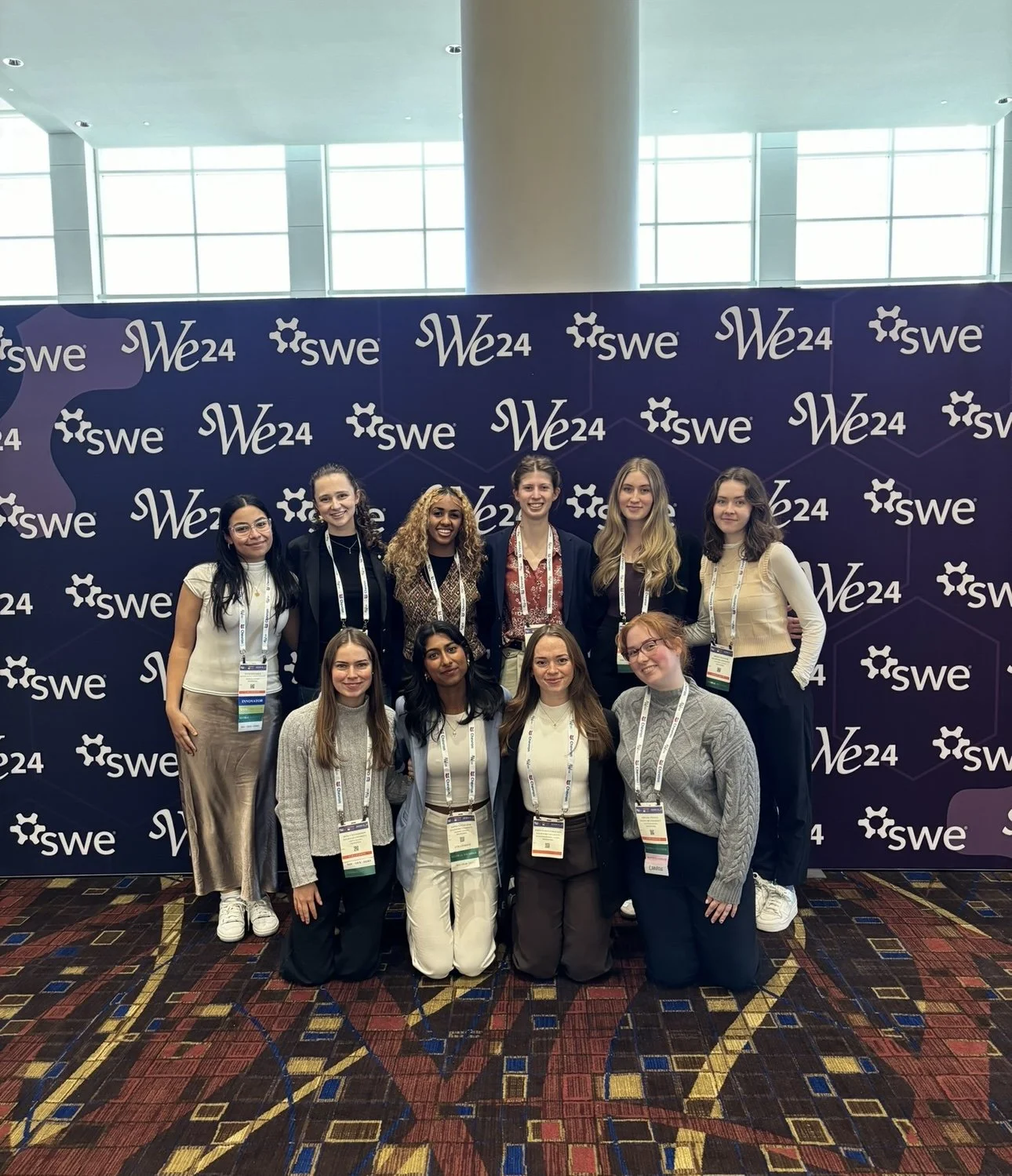
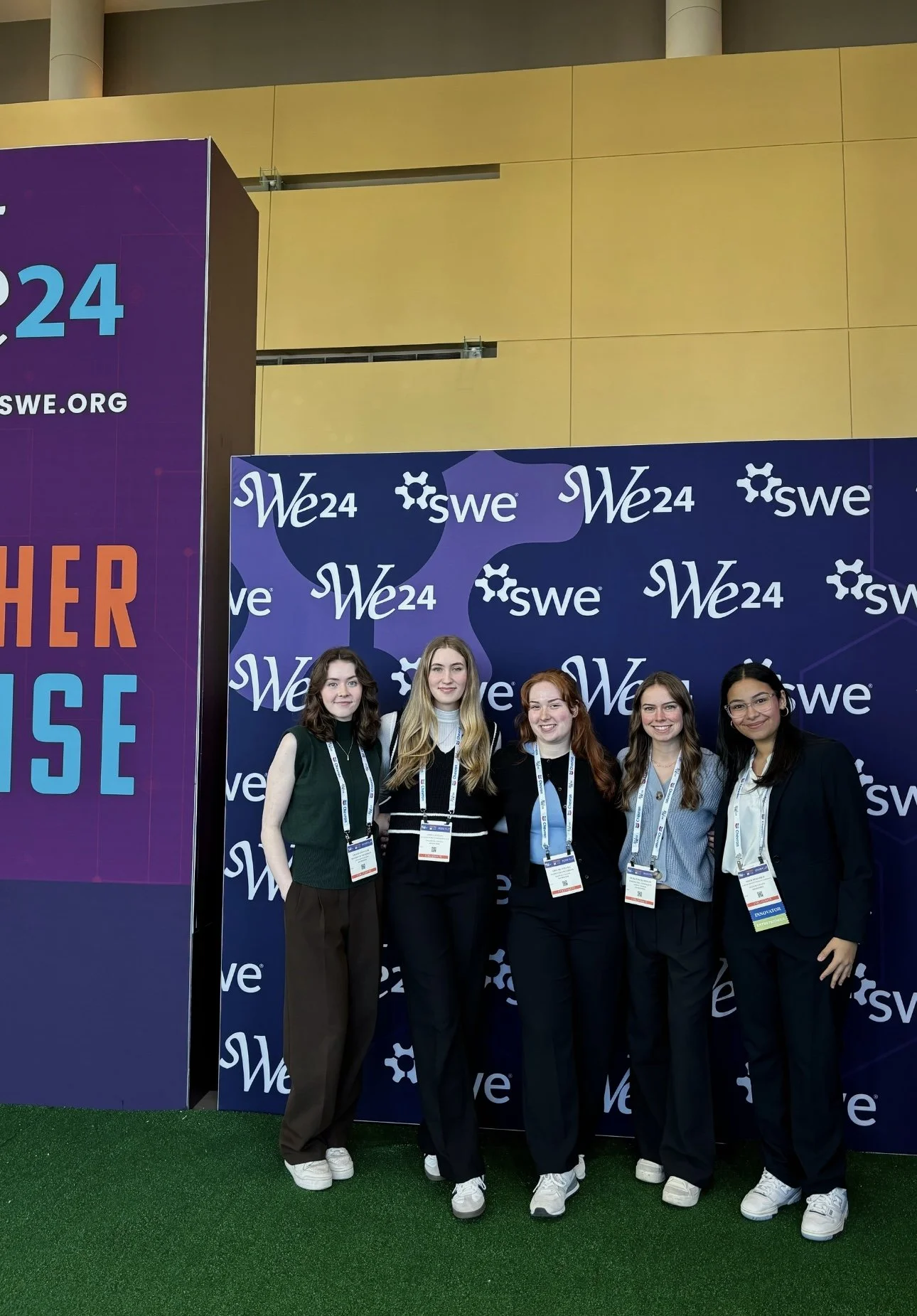
On Wednesday, Oct 23rd, 10 Dalhousie Engineering students travelled to Chicago, Illinois to attend the 3-day WE24 conference hosted by the Society of Women Engineers. This conference is hosted in a different US city each year and is the world's largest conference for women in engineering and technology. This conference offers women in engineering from around the world the enriching experience of attending various professional development sessions, networking events, a career fair and other advancement opportunities. This year’s conference theme was ‘Together We Rise’, emphasizing the importance of collaboration, unity and collective empowerment among women in engineering.

Sextant WiE Chicago Trip, by Molly Richardson

Sextant WiE Chicago Trip, by Molly Richardson

On Wednesday, October 23rd, ten Dalhousie engineering students awoke bright and early to begin their travels to Chicago, Illinois. These students were going to attend the world's largest women in engineering and technology conference. WE24: Together We Rise, is a flagship conference hosted annually by the Society of Women Engineers (SWE). This event is designed for professionals and students to network, gain career insights, and connect with industry leaders on innovation. Attendees could attend a variety of workshops, keynote speakers, presentations, and a career fair.

Conference on Diversity in Engineering, by S Adema

Conference on Diversity in Engineering, by S Adema

Back in November of 2024, I and five other delegates had the amazing opportunity to attend the 10th annual Conference on Diversity in Engineering (CDE) hosted by Western University in London, ON. CDE is a space dedicated to expanding knowledge about the rich diversity of individuals, cultures, and perspectives within the engineering community. Throughout the three-day event, we were able to learn how to honor and celebrate the differences among engineering students and professionals and bring that positivity and unity back home to our Dalhousie community.

Sextant Go Eng Girl Article, by Elisabet Astatkie

Sextant Go Eng Girl Article, by Elisabet Astatkie

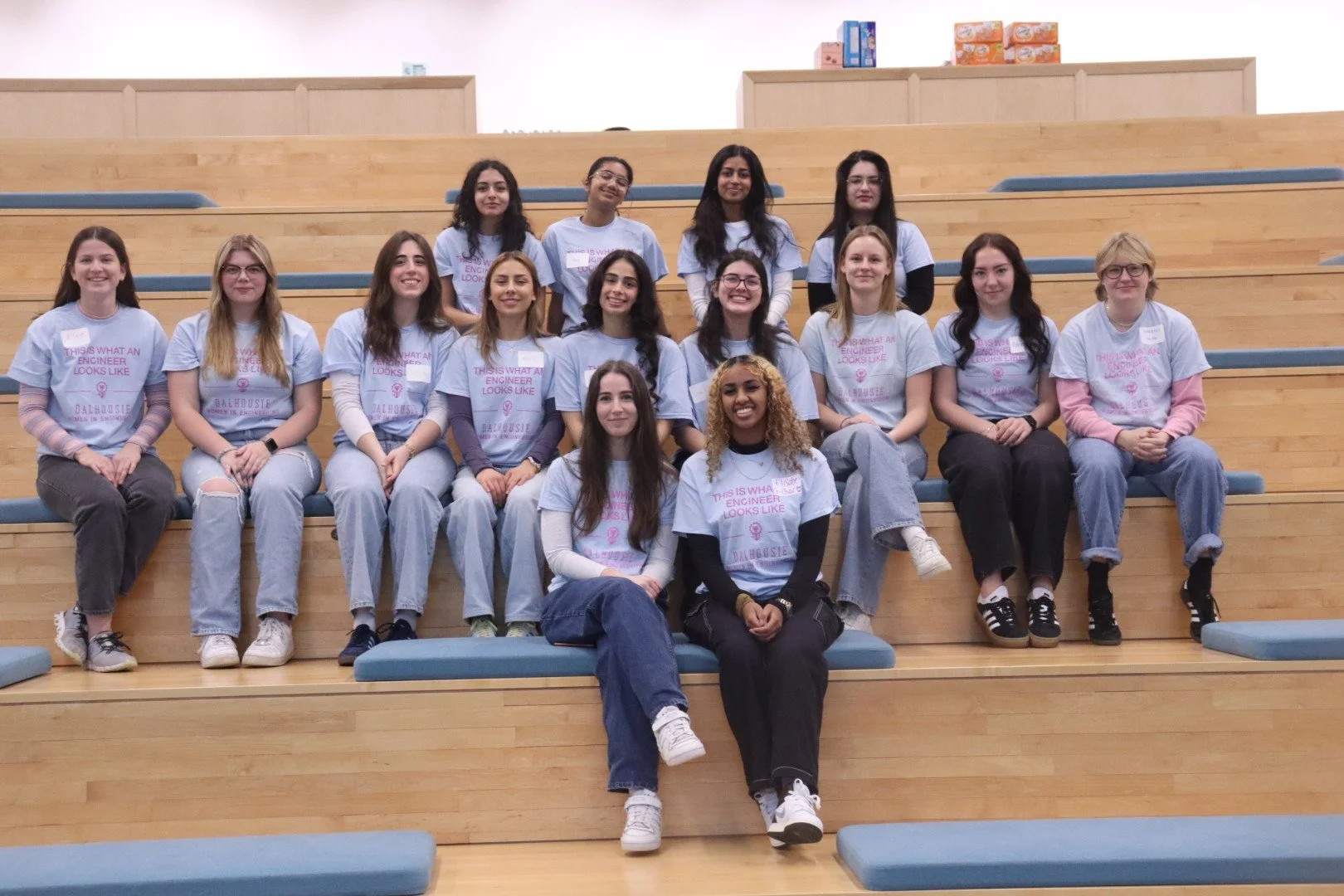
On November 23rd, 2024, the Dalhousie Women in Engineering Society hosted its annual Go Eng Girl event on Sexton Campus. The 2024 edition of the event was the largest hosted by the Society on record, with over 180 youth attendees, 80 engineering student volunteers, and a Go Eng Girl team made up of 16 executives. Students in grades 7 to 12 were welcomed from Digby to Antigonish to attend this year’s event.

Canadian Engineering Competition (CEC), by A. Kauser

Canadian Engineering Competition (CEC), by A. Kauser

In 2025, Dalhousie University will proudly host more than 200 undergraduate engineering students from across Canada to compete in the Canadian Engineering Competition (CEC). This competition, which is run by the Canadian Federation of Engineering Students (CFES), offers competitors a special chance to showcase their technical proficiency and inventiveness while solving actual engineering problems.

Enviro and Civil: Pints with Profs, by Rory McPhail

Enviro and Civil: Pints with Profs, by Rory McPhail

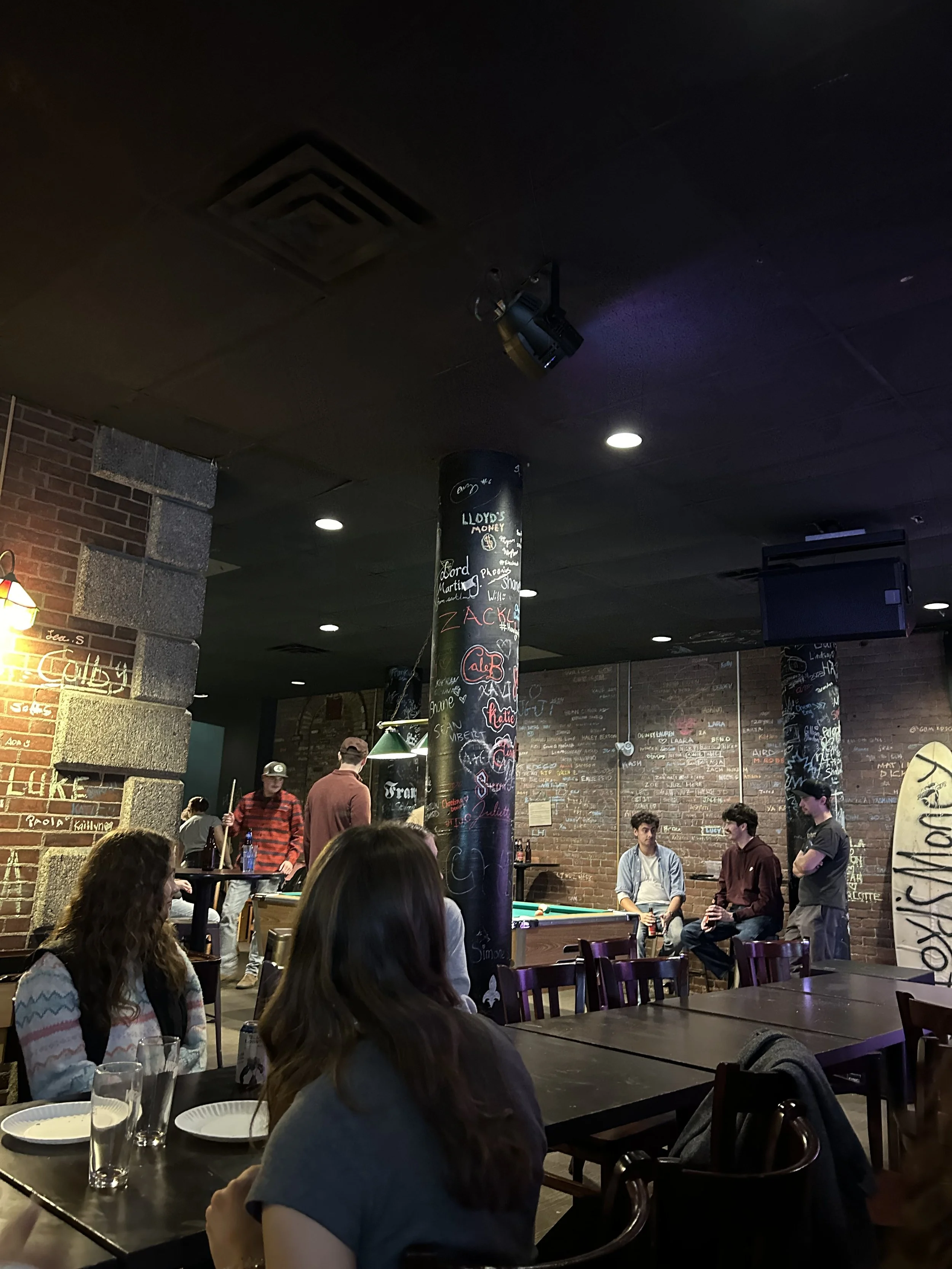
Earlier this month, on Thursday October 17th, the Environmental and Civil Student Societies hopped on the bandwagon and held a “Pints with Profs” event in the T room. This was Civil’s second annual Pints with Profs and the first time for Enviro. The event had a solid turnout from the Enviro and Civil students and professors, as well as other random students who happened to be in the T room on a Thursday night. Dr. Lake, Dr. T, Mr. Burgess, Dr. Liu, Dr. Somers and the third years’ favourite design prof from last year, Josh Pidgeon, all made an appearance. Dominos pizza was provided by the Civil Society and if anyone has ever wondered why pizza at events is almost always from Dominos, it’s because it’s so cheap (discount code: 50STDNT for 50% off) and usually the only thing societies can afford.