
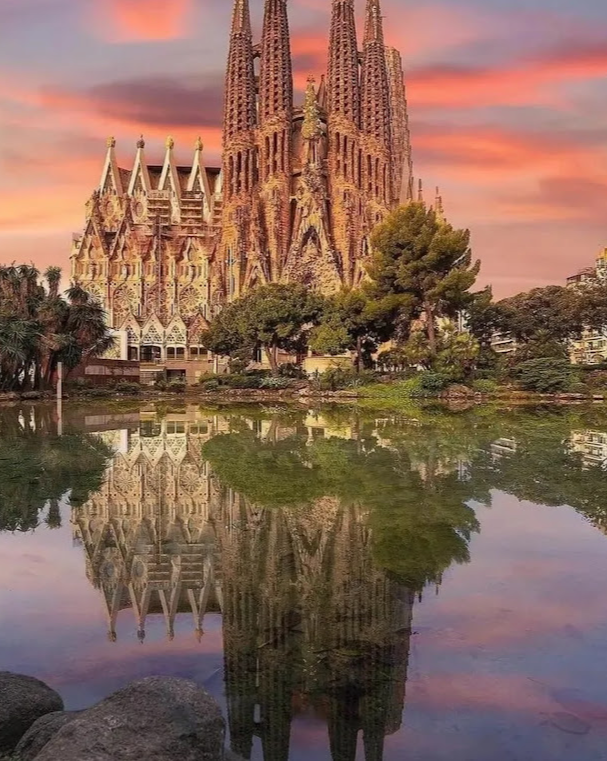
Europe takes the cake for the most visited tourist destination in the world. In 2024 alone, it welcomed 758 million visitors (Soler and Iraola Iribarren, 2025). While this helped to create over 20 million jobs, and contributed roughly €807 billion to the EU Gross Value Added, it is a growing cause of concern in terms of infrastructure, climate change, housing, public health, and food security.
The worrisome news is that Europe has been warming twice as fast as other continents since the 1980s (WMO, 2023). In the State of the Climate in Europe 2022 report, it showed that decades of nonstop heating has contributed to excess deaths and economic disruption. Many indicators in Europe are showing concerning signs of this; glaciers in Europe lost approximately 880 cubic kilometres of ice from 1997 to 2022, as well as the Alps hitting a new record loss of mass in a single year in 2022. This was catalyzed by low winter snowfall, an overly warm summer, and dust deposits from the Sahara desert (WMO, 2023).
Especially in Southern Europe; France, Italy, and Spain, this is raising concerns as this region accounts for more than 60% of overnight stays in Europe. The uneven distribution and influx of tourists in the summer months is a major factor.
However, there is hope. Sustainability will from now on be the prime principle behind the EU’s brand new tour-ism strategy, announced this October at the Global Tourism Forum in Brussels (Soler and Iraola Iribarren, 2025). As defined and outlined at the Forum, sustaina-bility is defined as “reducing emissions, including trav-el to and within destinations. It means managing re-sources wisely, protecting cultural and natural assets, and making sure that tourism contributes to a bal-anced regional development across the continent," said Apostolos Tzitzikostas, the European Commis-sioner for Sustainable Transport and Tourism. While many cities are combating the challenges of over tour-ism at the moment, I focus on a city that has been especially known to take the hits of over-tourism; Barcelona, Spain.
A city of only 1.7 million residents, in 2024 alone, 15.5 million tourists stayed overnight. The result is that Barcelona feels overcrowded for the locals that live there. Especially in the hot spots, such as La Rambla street and in the neighboring Gothic quarter.
Currently, there is not enough long-term housing avail-able, as it is all overtaken by short term leasing rentals. One of the ideas to overcompensate for the mass amount of tourism is to double the tourist tax to €15/night/tourist (Goodman, 2025). If this is approved, it would set aside at least 25% of the revenue earned to help with the current housing shortage.
Barcelona has developed a long-term 20-year plan en-titled ‘The Tree Master Plan of Barcelona’ in play from 2017 to 2037. It has a goal of increasing the presence of green infrastructure, air quality, and for creating a better public space in the city. The planting of more trees will also help the city to adapt to climate change, regulating local temperatures, reducing flood risks, and increasing biodiversity.
The four main established goals to be reached by the end of the 2037 are increasing the city’s tree coverage by 5%, ensuring that 40% of tree species are adapted to climate change, achieving a biodiverse tree heritage, and providing the general public with the knowledge that urban tree planting provides.
With tourism and travel becoming easier and more ac-cessible to the public, it will not be easy to balance re-taining tourism and all that it contributes to the local economies, alongside protecting the environment and local communities. However, the EU’s new tourism strategy is a good place to start, for the future of heavily visited cities of Europe, such as Barcelona.
Resources
Euronews. Sustainability to Shape the EU’s First-Ever Tourism Strategy. UN News. Europe Warming Twice as Fast as Other Continents. CNN. Barcelona Finally Turned on Its Crowds of Tourists. UNA City. Tree Mas-ter Plan. C40 Knowledge Hub. Trees for Life: Master Plan for Barcelona’s Trees 2017–2037.