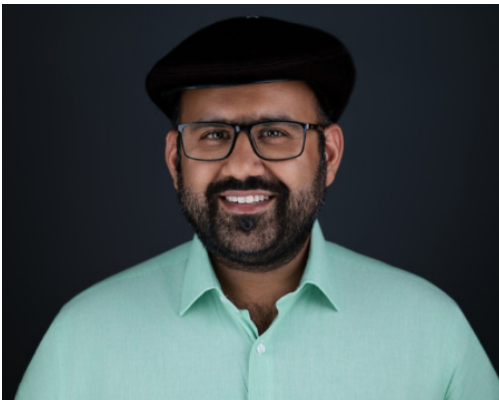
Interview with Dr Gentleman from Department of Engineering Mathematics and Internetworking, by Assadah Kausar

When you think of calculus, zooplankton aren’t probably the first thing that come to mind – but for Dr Gentleman, the two are closely connected. As a dedicated professor in the Engineering Math Department with a love for studying the ocean, Dr Wendy Gentleman uses mathematical models to understand these tiny creatures' behaviours and their ecological impacts. In the classroom, she shows students how gradients and curls reveal patterns in the world around us. Through her research, she applies these ideas to how zooplankton interact with the ocean. In this interview, we discusses her unique journey, teaching philosophy, and her advice for students pursuing their own passions. 

Academic Background

Dr Gentleman's journey to oceanography was anything but direct. She started at McGill in a physics, chemistry, and math program but switched to engineering for its practical applications. An environmental elective inspired her to make a difference, and a chance discovery of a Dartmouth program combining engineering and environmental science led her to fisheries research. Then, she completed a PhD in numerical modelling, a postdoc in Seattle studying carbon flow, and joined Dal's Engineering Math and Oceanography departments in the early 2000. She summed it up: “Life is a combination of opportunities you create, luck, and random events.

Research

Her research focuses on modelling to turn complex concepts into mathematical equations that reveal real-world insights. One key area is studying the connectivity of zooplankton, looking at how they flow with ocean currents and analysing ecological and genetic differentiation. With her master's student Karsten Economou, she uses network theory to map the dispersal of these tiny organisms, creating maps that illustrate the networks of fisheries. She also investigates the role of zooplankton in the ocean’s carbon cycle, modelling food webs and showing how zooplankton consume organic carbon and “believe it or not, they poop,” transferring carbon to the deep ocean and helping estimate how much carbon oceans can absorb.

“I want to put my head on a pillow at night and feel like I have made a difference in the world,” she says, reflecting on her drive to make a positive impact. Research can be slow, but she hopes her work deepens people’s understanding of the ocean and supports their research. Even if the difference feels small, knowing her contributions help others makes it worthwhile.

During her postdoc, she was involved in outreach, which helped keep her engaged, but the biggest challenge has been maintaining a healthy work-life balance. Academia often feels endless, demanding a lot of time and energy. Balancing outreach with personal responsibilities was tough, but she’s grateful that there are now more supports for students and professors facing similar situations.

Teaching Philosophy

She wants students to know they can succeed and works to make math engaging by using real-life examples in her lectures. Reflecting on her own education, she recalls how professors made math feel boring and abstract, like one who explained concepts with the analogy of turning an orange inside out. Her struggle with vector calculus was particularly memorable—she once threw her textbook at a wall, leaving a dent. Ironically, she was later assigned to teach the subject, but it turned out to be a great experience. She found confidence in translating complex math into relatable concepts to keep students happy and engaged.

Her parents were both professors—dad in computer science and mom in stats— she spent a lot of time around the University of Waterloo as a child. Throughout her journey, people like Gordon Fenton, chair of the engineering math department, have been supportive. She feels that role models are really important, not just for showing you how to lead, but also for showing you what not to do.

Advice for students

She advises students and friends to find opportunities and take advantage of them—sometimes you have to create your own. Cold calling a professor to ask about research is a great way to start. That’s how she met Karsten Economou, who reached out and has been working with her ever since. She stresses that class isn’t the real world—real-world experience is hands-on, often with a team across different fields. Co-ops are valuable, but you can also find internships and create those opportunities.

Interview with Dr. Baafour Nyantekyi-Kwakye from the Mechanical Engineering Department, by Ikhlas & Bhavneet

Dr. Baafour Nyantekyi-Kwakye is a dedicated professor in the Mechanical Engineering Department at Dalhousie University. Whether you’ve taken his courses or sought his advice on engineering challenges, Dr. Baafour’s passion for teaching and commitment to innovation shine through. His academic journey from Ghana to Canada and his devotion to inspiring the next generation of engineers make his story both motivating and insightful. It was a pleasure speaking with him, and I hope you enjoy learning more about him as much as I did.

On what inspired him to pursue mechanical engineering:

“My interest started in high school when I thought about how to reduce the cost of electricity. I didn’t initially connect this with mechanical engineering until I watched a career fair program where a university department showcased solar energy innovations. Seeing that, I knew I wanted to be a mechanical engineer.

“I specialized in thermo-fluids and energy systems during my undergraduate studies, which shaped my path. My graduate research in Canada built on that, focusing on reducing NOx emissions and studying hydropower generation. It’s been a rewarding journey, blending energy systems, environmental sustainability, and practical engineering.”

On what drew him to teaching:

“I’ve always enjoyed teaching. In high school and university, I found explaining concepts to my peers helped me learn better. Teaching others has always been my passion. However, I wanted to teach at the university level, so I pursued a master’s and Ph.D. to reach that goal.

“To me, teaching is about transferring knowledge to others and inspiring them to achieve their best. It’s incredibly fulfilling to see students grow and apply what they’ve learned to solve real-world challenges.”

On his transition from Ghana to Canada and the challenges he faced:

“My move to Canada came with a cultural and academic shock. In Ghana, assignments were rarely given in the first few weeks of a term. Here, you could have assignments on the very first day! The workload and intensity were eye-opening but also prepared me for the demands of my field.

“Another adjustment was adapting to the terrain. Coming from a mountainous region in Ghana to the flat prairies of Canada was surprisingly challenging. Over time, I grew accustomed to the changes and learned to appreciate the new environment.”

On the most valuable lesson for students:

“The key is to connect theory to practice. For example, understanding the Navier-Stokes equation isn’t just about solving it on paper—it’s about applying it to design and optimize real-world systems like transportation or energy networks. My advice to students is to focus on the practical applications of the theories they learn in class.”

On the importance of labs and hands-on learning:

“Hands-on experience is crucial. Labs—whether physical or numerical—are opportunities for students to apply their knowledge and visualize how things work in practice. Even students who don’t pursue co-op programs can gain practical insights through labs. I encourage students to treat labs as integral to their education, not just as a course requirement.”

On advice for first-year and struggling students:

“Engineering is tough, but it’s also incredibly rewarding. First-year students often struggle to connect what they learned in high school with university concepts. My advice is to keep an open mind, focus on understanding the concepts, and stay passionate about why you chose engineering in the first place. Passion is what will carry you through the challenges.”

On his hobbies and interests outside of work:

“When I’m not teaching, I enjoy photography, particularly capturing landscapes and animals. Spending time in nature helps me recharge. And, of course, I occasionally unwind with a game of FIFA—it’s a great way to relax after a busy day.”

Dr. Baafour Nyantekyi-Kwakye’s journey is a testament to the power of passion and perseverance. His dedication to teaching and inspiring the next generation of engineers reflects the best of what Dalhousie’s Mechanical Engineering Department has to offer.

Interview with Dr. Ismet Ugursal from the Mechanical Engineering Department, by Bhavneet Bhatia

Dr. Ismet Ugursal is a well-known professor within the Mechanical Engineering Department at Dalhousie University. Whether you’ve attended his lectures on thermodynamics or studied energy management under his guidance, it’s clear that Dr. Ugursal is as passionate about teaching as he is about his research. His extensive experience across various countries and energy sectors brings a wealth of knowledge to his students. It was a pleasure to interview Dr. Ugursal, and I hope everyone enjoys learning more about him as much as I did.

On his unique challenges and insights from working in multiple countries:
"The challenges and insights primarily stem from the socioeconomic conditions of each country. People everywhere share similar expectations, hopes, and shortcomings. What varies are wealth, education levels, and access to health services—key components of human development. These differences shape the challenges in each context. For example, in Sierra Leone, energy use is primarily for cooking, with charcoal or wood, since conventional energy sources like gas or oil are prohibitively expensive. Energy conservation isn’t a priority there—they first need access to energy. In contrast, wealthier countries like Canada can focus more on energy efficiency because people have the resources to do so."

On his transition from industry to academia:
"My shift to academia was driven by my desire for independence. At the time I entered, academia offered a lot of freedom—choosing your research, teaching in your own way, and following your interests. Although the rules have increased over time, I still value the autonomy I enjoy in this field. I’ve been fortunate to have a career where my work feels like a hobby. My industry experience keeps me grounded in practical realities, which helps me avoid being overly theoretical in my research and teaching."

On his interest in energy research:
"It happened by chance. Initially, I thought I would pursue a corporate career. I majored in machine design and industrial engineering, aiming for a future in the corporate world. But I found myself working in the energy department at a research institute, and I was hooked. Energy affects every part of life, and the field is constantly evolving, making it both intellectually stimulating and full of opportunities for improvement."

On the most valuable lesson for students:
"The most important lesson is that learning should be enjoyable. If it’s not, you may need to reconsider whether you’re in the right field. Learning should excite and inspire you. Also, you should never stop learning. When you stop learning, it might be time to explore something new, because continuous growth is key to staying engaged and passionate throughout your career."

On his suggestion to engineering students:
"My suggestion is to maintain your enthusiasm for learning throughout your career and never assume you know everything. Complacency can lead to mistakes and diminish your passion for your work. Engineering is a long journey, and you’ll spend a significant part of your life working—so staying curious and passionate is essential for both your success and happiness."

On his hobbies and interests:
"My main hobby is my work, but I also enjoy traveling and driving cars. I occasionally visit racetracks, which is an exhilarating experience. I’m also a scuba diver, though not around here since the water is too cold. The underwater world is breathtaking, especially near the equator. If you ever have the chance, I highly recommend trying it."

On his iconic car and symbolic skull ring:
"My car is a Lancia Stratos, an iconic rally car that debuted in 1973. I was 18 when it came out, and I was captivated by its design and performance—it was unlike anything I had ever seen. Owning one seemed impossible back then, but years later, I discovered a company in England that specializes in building replica kits of the Stratos. I couldn’t resist. With the help of two former students, now close friends, we built the car piece by piece. It’s a raw, powerful machine and a real challenge to drive. Its short wheelbase, mid-engine layout, and lack of driver aids require full engagement every second you’re behind the wheel. It’s thrilling, but it demands respect. As for the skull ring, it’s a personal symbol reminding me of my mortality. It keeps me grounded by reinforcing the idea that life is finite, encouraging me to live with purpose."

Interview with Dr. Amyotte from the Chemical Engineering Department, by Kaitlyn Dalton

Dr. Amyotte is a well-known professor within the chemical engineering department. Whether you have taken Fundamentals of Chemical Engineering class or Process safety with Dr. Amyotte, it is evident that he loves his students as much as he loves his work. It was a pleasure to interview Dr. Amyotte, I hope everyone enjoys getting to know him as much as I did.

On why he chose to study at the Royal Military College (RMC):

I was born in Halifax and raised in Dartmouth. In grade 12 I played football; our coaches were all military guys from Shearwater. One of them was friends with a football coach from RMC, he happened to be in town at our football party in grade 12 and said I should join. My dad was in the military as well, so I looked into it and next thing I know I’m on a service flight to RMC, one of the best decisions I’ve ever made in my life.

On why he chose to study chemical engineering:

I had a great chemistry teacher in grade 12, so it all goes back to high school. It was the first time I ever heard of the mole as a concept, I struggled a bit at first but then I got it and it all made sense. So, I really credit him, his name was Mr. Moore.

On why he chose to pursue a master’s degree and a PhD:

I was at RMC, and I had finished, so I was ready to go into the navy. I realized that I really wasn’t ready and that I wanted to do more chemical engineering. We had a four-year commitment to the armed forces after graduation, but I deferred mine by two years to do a masters. I applied for a scholarship and got one, and then I went to Queens University because I liked Kingston. By the time I was finished in Kingston I had gotten married, my wife was from here (Nova Scotia). I was getting out of the forces, and I was like “okay what next?” I looked in industry a bit, a couple of potential job offers in the nuclear industry in Ontario, but we both wanted to come back to Nova Scotia since it was home. I applied and got accepted to the PhD program at the Technical College of Nova Scotia (TUNS).

On why he wanted to pursue teaching:

I hope it shows through in the classroom that I love teaching. After I finished my master’s and went back to the armed forces, I went into the navy. I realized there wasn’t a lot of room for chemical engineers in the navy, so I decided I didn’t want to pursue an entire career with them. I was posted back to RMC to teach. I taught at RMC between my master’s and PhD for three years. Came back here, and I had a full-time teaching assistantship, so I was able to teach while doing my PhD and I just really liked it.

On his interests and hobbies outside of work:

If you asked my wife she would say my work, and if you asked me, I would also say my work, I just really love it. I love sports, I played sports growing up, football, wrestling, paddling. I also love watching sports, especially NFL football. I like to read, I sort of alternate between fiction, Jack Reacher, and technical type novels and books. I also like historical fiction. I love to travel, one of the great things about my job is that I get to travel quite a bit.

On his advice to students:

I sort of have three things that I like in my life if I’m going to do something. I want it to be fun, I want it to be something that I would enjoy. I guess I would say to undergrads and master’s students is that as you’re going forward and looking into different careers, I would want it to be fun and enjoy what it is. The other thing is to try and be good at what you’re doing, try and be competent. Always try to be good at what you’re doing and look for ways to improve. The third is to have a reason for what you’re doing. To me, there’s this generation of wealth in engineering, and sometimes it’s financial wealth, if you want to have a family or travel, engineering is a great career to do those things. If you can have fun, be good at what you’re doing and find some way to make the world a better place you’ll have a good career.

Interview with Jon Totten from the Chemical Engineering Department, by Kaitlyn Dalton

If you’re in the Chemical Engineering program at Dalhousie University, you most likely have been fortunate enough to have had Jon as an instructor. Jon is passionate about his job, as well as his students’ success, I hope you enjoy getting to know him.

On his educational background at Dalhousie:

I actually did a degree before chemical engineering… it was a Bachelor of Science with a major in psychology. This seems like a really weird switch; I didn’t really know what I wanted to do when I was younger, just trying to please my parents and get a degree. When I was doing that degree, I took a course called Personality, and part of it was to take a Myers and Briggs personality test. It tells you your personality type and what job might be best suited for you, it told me engineering was one of my top choices. So, I made that hard switch, graduated with a psychology degree, then enrolled the next year into the Bachelor of Engineering. I chose Chemical engineering because I was really interested in the oil and gas industry at the time.

On why he chose to pursue a master’s degree:

As I was graduating, there was a big hiring freeze, a barrel of oil went down to $20 dollars. There were no job prospects. At that point I was interviewing for other positions… I was interested in getting into the work force any way I could. That didn’t really pan out, so I went and talked to a few of my professors that I had in my undergrad and told them that I was interested in doing a masters, and specifically, multiscale modeling of chemical engineering processes. That ended up getting myself in the door, I got a supervisor and found a right fit for me. I did two years of my master’s here at Dalhousie. My focus was a little bit different; it may not seem like chemical engineering, but it was about modeling the delivery of dissolved oxygen to Atlantic salmon.

[Jon is currently finishing a PhD in Chemical Engineering at Dalhousie as well]. I my PhD, I am interested in improving the hydrodynamics of commercial ebullated hydroprocessers used in bitumen upgrading in the Canadian oil sands - this is an industry sponsored project with Syncrude.

On why he wanted to pursue teaching at Dalhousie University:

When I started grad school, I didn’t intend on teaching. However, during my master’s and PhD, I did a lot of TA work in various core chemical engineering courses. One of the courses I TA’ed a lot in grad school was the capstone course, Product and Process Design, which allowed me to develop a skillset with the Aspen HYSYS software. This skillset led to sessional instructor positions in the chemical engineering department teaching Process Simulation and Plant Design. I got a lot of positive feedback from students over time and the experience of teaching and being a role model/mentor to students has been rewarding. On his life outside of work:

My biggest thing right now is that I have two small children, my daughter, Sophia, she’s ten months, and my son, Benson, he just turned four years old. A lot of my time is spent doing sports and different activities with them. I also love watching MMA and my favorite sports teams (Toronto Maple Leafs, San Antonio Spurs, New England Patriots, and Toronto Blue Jays). In my free time I also do a lot of reading and playing Pokémon Go.

On his advice to students:

My best advice to students is to get involved in extracurricular activities during your undergrad, is to make lasting relationships and connections with your peers, teachers, and industry, and most importantly, prioritize your mental health. As engineers, we can set high expectations for ourselves and expect A’s on every deliverable. However, this mindset can set us up for disappointment if we have a bad test or assignment. Throughout my undergrad, there were many times where I did poorly, or even failed a test. I learned not to take everything so seriously and that bad tests happened, but my mental health was more important than getting the A. A few tips to protect your mental health during undergrad would be for students to get adequate sleep, eat properly, and spend time with peers outside of school.

Anyone who has had Jon as an instructor knows that he is passionate about teaching and truly cares about his students. Thank you, Jon, for the interview and for the excellent responses!

Interview With Dr. Amina Stoddart, by Ashley MacDonald

Dr. Amina Stoddart is an assistant professor in The Center for Water Resources Studies and is also part of the Civil and Resource Engineering Department here at Dalhousie. Dr. Stoddart gives both undergraduate and graduate students the opportunity to learn from her vast knowledge of local water systems and water problems. Dr. Stoddart’s positive outlook and enthusiasm for helping students not only to learn the required content but also to gain skills that set them up for future success shines in this interview. I hope you enjoy.

On her life before teaching at Dalhousie

I’ve actually been at Dal a really long time. I did my undergrad through the AU program, so I went to Acadia and finished at Dal. I did a co-op term in The Center for Water Resource Studies, loved it … then I started grad school right after I finished my [degree]. At the time it was biological engineering, but it was kind of a mix of environmental and mechanical. I started a master’s program within The Center for Water Resource Studies focused on drinking water treatment, and I really loved that. I didn’t finish my masters, I transferred to a PhD …  Near the end of my PhD, I worked as a research engineer in The Center. I loved that and then had the opportunity to work as a limited term assistant professor where you’re not tenure track; it’s a term contract. During that term contract there was the opportunity for a tenure track contract position …  I got that and here I am!

On saying yes to opportunities

Oftentimes students, especially grad students, are like ‘how did you get here’ … ‘how do I do that’ or ‘I want to be like you’, whatever it is, and I think a lot of it is being at the right place at the right time. But I think having the right skills at the right time and just saying yes to opportunities [plays a role] too. And sometimes I know throughout, while that seems like a very direct path, there were questions along the way. I thought I wanted to do biomedical engineering, but I did a co-op term in biomedical engineering and showed myself that that’s not for me. But by saying yes to those opportunities, you kind of narrow your path … Sometimes you might think ‘this is almost coming too easy’, or ‘should I just take this path that’s opening in front of me or should I try something different’. Those paths open in front of you because of hard work and because saying yes [to opportunities] gets your further along.

On what drew her to engineering

I know it’s not a good answer, but I want to say competition with my brother … My brother went into engineering at Acadia and really loved it and I had the stereotypical math and science so it was a sort of natural path. I had parents that were in more technical types of professions; my dad was in the trades, so he worked with a lot of engineers. It was something that my family knew about and talked about a little bit.

On what drew her to teaching

I think what really drew me into a professor role was more on the research side.  I worked as a research engineer with a large research program we have here out of The Centre of Water Resource Studies. We have a lot of industrial research partners and so a lot of my research as a PhD student here was really focused on solving problems that we saw working with Halifax Water and different industries … I'd say my favourite part about teaching is, yes you need to teach the things you need to be an engineer- you have to be able to do this calculation and that calculation and understand why it’s important and all of those things. But I really enjoy sharing some of that research thing, bringing in those anecdotes and what I understand about how our water systems work here locally. It makes it tangible.

On her advice for students

This is coming kind of full circle but saying yes to different opportunities. If you think it’s something that you might want to do or if you see a co-op job or something where you’re like ‘I don’t know if I have the skills for that’ but you want to gain them or go that way, just saying yes to those opportunities that come up. You know, being involved and engaged. The more you put yourself out there the more opportunities come your way and the more skills you gain.

Closing Remarks from Ashley

Students could learn a lot from Dr. Stoddart’s words about saying yes to opportunities, even when they feel daunting. Many thanks to Dr. Stoddart for sitting down for this interview and for the insightful responses.

Interview with Dr. Ghanem from the Chemical Engineering Department, by Kaitlyn Dalton

Dr. Ghanem has been a professor with the Chemical Engineering department at Dalhousie since 2001. In every class she teaches, it is obvious that she cares deeply about her students and is passionate about her work. It was great getting to know Dr. Ghanem, I hope you all enjoy reading about her.

On her educational background:

I did a chemical engineering bachelor’s degree at UNB…I didn’t know anything about it, I liked chemistry and had a strong family influence to do engineering. My family is all scientists, but I had no idea what engineering was about. After I did my degree at UNB I worked in industry for a couple of years, in the oil and gas industry, then I went back to grad school to get a PhD.

On why she chose to pursue a PhD:

This would have been a long time ago; things were very different. In the ‘90’s, I was working at Imperial Oil…I worked in the process design group. There were activities for all the new hires that year to see various aspects of how the company worked. For example, we all went and pumped gas one day. They wanted us to get an idea what the company was all about and like, and for us to see how we would fit in. One of the activities we had was we all went to the Sarnia research facility. It had a pilot plant in it, I became very interested in the scale of the plant. It just seemed really accessible to me, whereas the work I did in the oil refinery was just so big. I just really liked the idea of having a scaled down version that I could understand from start to finish what was going on…so I became interested in research at that point and that encouraged me to do my PhD. I went to Cornell University in New York.

On why she wanted to pursue teaching:

That was just purely random, I think. I wasn’t sure that’s what I wanted to do when I was in grad school. It was just really kind of a fluke, I ran into an old professor at a conference…I went up to him, I still can’t believe I did this, I introduced myself and told him I was doing my PhD at Cornell. He was very intrigued and happy to hear that. He had moved from UNB to be the department head at the University of Maine, so he wanted to know when I was graduating and whatnot. It was all short of lined up that he had a position open and recruited me to go to Maine. It was just a matter of being in the right place at the right time and staying in touch with an old professor. 

On her interests and hobbies outside of work:

I’m a parent, so most of my life is taken up by that. I’ve been renovating my house, I’ve learned an enormous amount from doing that, I love DIY stuff and making stuff. I’ve always been into sewing and creative artistic pursuits. I like to go skiing as well, causal easy outdoor stuff.

On her advice to students:

Don’t take everything so seriously, see the value in what you’re doing no matter what it is. If it’s relaxing, then there’s value in relaxing, if there’s extracurricular activities then there’s value in that. If there’s a test, take it, then leave it behind you. In all aspects of life, when there’s difficulty, my advice is to experience it and then let go. That’s the best advice I can give for mental health. If you’re upset about a test, allow yourself some time to be upset about it and then get over it and just go on with your life.

Interview with Dr. Craig Lake, by Ashley MacDonald

Dr. Craig Lake is a professor in the Civil and Resource Engineering Department for both undergraduate and graduate students, and has worn many hats over his almost 23 years at the university. Students may know him from taking his courses such as Soil Mechanics and Solid Waste and Landfill Engineering or even as the current undergraduate coordinator for the department. We hope you enjoy getting to know more about Dr. Lake and that you take something away from his experiences in engineering.

On his career before Dalhousie:

“I did my undergrad here at Dal- I did civil engineering, co-op. Before that, I grew up in Windsor, Nova Scotia … I went to Acadia for the first two years of my degree then I came here. I spent three years here, I worked co-op doing different lab testing type jobs like material, soil type stuff – that’s sort of how I got interested in soil mechanics. Then I went to Western university, I was there for 5 years to do my PhD. Then my wife and I moved back to Halifax, I took a job with a company called Jacques Whitford, which doesn’t exist anymore … basically I did geotechnical consulting. I was there for two years and a bit just working on projects for roadways, bridges, landfills, retaining walls, anything under the sun.”

On how he got into geotechnical engineering:

“So totally stumbled, I didn’t have a clue. I wasn’t even sure I wanted to do civil engineering. I didn’t know what I wanted to do. I did the two years, almost went into Mining Engineering but went into Civil because a lot of my friends were going into Civil … I started doing work terms, I did a work term with Jacques Whitford, the company I started working for 7 years later, and sort of liked the whole idea of construction and testing and theory.”

On what made him want to go into teaching:

“I had a great grandmother that was a teacher, I have a grandmother that’s a teacher, and my mother is a teacher. I didn’t ever think of teaching as a career choice, I don’t know why … My supervisor talked me into doing my PhD, actually, because he thought I would make a good professor and teacher. I went to work with this company for two years and then this job came up here at Dal. Professor jobs don’t come up every day, so I thought maybe I’d try it and see; I could always go back to what I was doing because I did like it. And I’ve been here for 22, almost 23 years.”

On a lesson learned in his career so far:

“I would say that you have to enjoy what you’re doing, if you don’t it is a very long life. Not to say that you need to enjoy it 100% of the time but by in large you do have to derive some sort of satisfaction.”

On his life outside of work:

“I have kids and they keep me busy, not as much as they used to. My wife and I, we have a pretty quiet life but I do like to exercise. I’m a very rigid fitness person. I like to go and be outside a lot, whether it’s going to my parent’s cottage in the summer, or I love walking … The last couple of months though, I’ve been addicted to Game of Thrones.”

On his advice for students:

“I’d say, students are very focused on results, and I think you have to be, but I think students could be just a little more focused on trying to do the best that they can do and try to understand things. Marks don’t matter so much, to be quite honest, for most things - they do for some. I feel like students get so worked up over their mark that they might sort of lose track of what they’re really there for, which is to learn. If you get an A and you can’t remember what you learned in a course, but you get a B and you remember everything, you’re probably that much further ahead.”

About life and careers after graduation:

“I think it goes back to what I said before, that you need to find something that you like. It may not become apparent the first time that you get a job, and liking something isn't necessarily liking everything. Maybe it’s the people that you like or the type of work or the location that you like; Something has to drive you to want to go to work. You’re at work 40 hours a week, you sleep a lot more than that and your spare time is actually a lot less than that so if you don’t like it, it’s really not a good way to go through life … If you like something you’re going to end up doing well at it, if you do well at it you’re probably going to make good money at it.”

Final note from Ashley:

A big thank you is owed to Dr. Craig Lake for his thoughtful responses and advice to students. We hope that this article provided not only a better background on Dr. Lake as a professor but also some comfort for students that may not know exactly where they want to end up yet. Again, thank you Dr. Lake for this interview.


Interview with Dr. Hamed Aly, By Cameron Archibald

Dr. Hamed Aly is well known to all engineering students, teaching the notorious electric circuits course. Whether you love circuits or it strikes fear in your heart, most agree Dr. Aly is a memorable and passionate professor. We hope you enjoy getting to know his story and model of an engineering career.

On how he came to study electrical engineering:

“Because of my passion to know more about something that I'm not seeing, but I'm feeling, which is electricity. When I was young, I was watching the tv. And I don't know how this guy's working. I was seeing there's power but I don't know what's inside how does it work? But if I touch it you know, I'm feeling that's why it gave me a passion to study something related to that, to know what is inside. … I chose electrical because I love mathematics. I love to use my imagination, and I love to work in an office instead of going outside.”

On his transition from industry to graduate studies:

“After I got my bachelor, I started working in the industry for a couple of months. And I found that in industry, it's very interesting. But the problem is after like a couple of months, there is a repetition for the work. There is a very, very small narrow channel for a new part you are seeing. There is creation, but it's very limited. That's why I started thinking about master and PhD because I love to know the new technology, and I love to learn more. I love seeing new problems try to solve them.”

On his passion for teaching:

“I'm enjoying while I'm seeing students are engaged and excited to know more about the topic that I'm teaching. I love teaching, that's why. I'm being so happy while I'm seeing students asking, and asking details, asking me to repeat.”

On his graduate students:

“You couldn't imagine my feeling, while I'm seeing my graduate students get their masters or PhD and start competing with me for publication. Actually they are not competing, I'm joking, but what I’m saying is that if my students become better than me, this is my success. I should transfer this knowledge to my student to be better than me.”

On his life outside of work:

“I’m enjoying playing with my kids, especially soccer. Because my kids are raised up here, so they don't know a lot about Egypt. That's why sometimes I'm sitting with them reading about Egypt. Telling them about their family in Egypt and how we moved here. Plus playing with my older son, he loves to play with me and I love to play with him.”

On his advice to students:

“My advice is to love what you are working on. If you are going to not like what you are working on, you will not be creative. Even if you are working on very, very small project, you can be creative in that project if you love it. If you didn't like it, you will feel it, you will not be creative and you will not find yourself in that project and you will not enjoy. So again, try to enjoy what you are doing. Life is very short, and if you are not enjoying, you know, you will regret, because every day is not coming back. Even if you are writing a test, try to enjoy while you are writing the test. Don't put yourself under pressure, this is a test it will affect my performance. If you did that, you will not succeed. So try to be relaxed, do your best, and everything will be very simple.”

Final note from Cameron:

Students of Dr. Aly will laugh at his comment about test-taking considering his exams are very difficult. I have found success with his advice; once seated in Sexton Gym I can’t prepare any more, so I try to smile and do my best. Many thanks to Dr. Aly for the excellent responses, and let us know what other professor you’d like to hear from.