
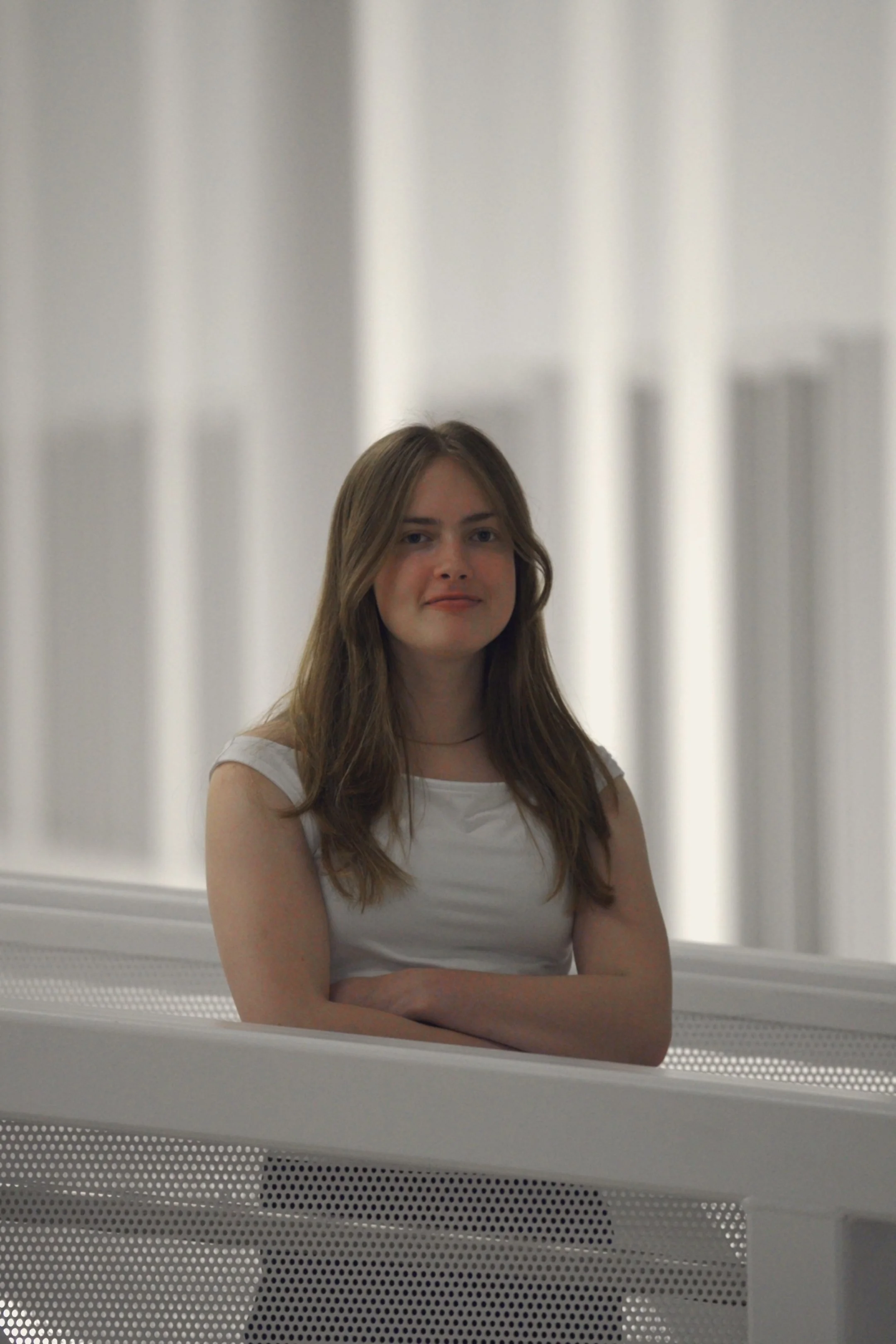
Anna Brozek may describe herself as introverted, but she's never been one to shy away from asking questions. Driven by her curiosity, the first-year Bachelor of Planning student has made her willingness to question the world around her into a strength.
Growing up in Fall River, Nova Scotia, Brozek had always pictured herself attending Dalhousie University. Attending summer camps on campus as a child, she has now returned to begin her undergraduate degree, finding new ways to explore a familiar place.
Planning wasn't a field Brozek had been exposed to or initially considered. With a longstanding interest in environmental issues, she first explored programs in environmental science before discovering urban planning. What attracted her was the opportunity to combine several interests within one discipline, bringing together environmental sustainability, public health, policy, and community development.
Brozek's involvement in youth climate initiatives throughout high school reflected those interests. Since then, her curiosity has led her to explore the social dimensions of planning, especially how the design and development of communities can influence public health and quality of life.
From transportation networks and housing to public spaces and accessibility, urban planning shapes how people interact with their surroundings and experience everyday life. Beyond the physical development of communities, the field requires an understanding of the social, environmental, and economic factors that influence decisions and the people affected by them.
A field built around collaboration, planning brings together architects, engineers, governments, and community members, balancing different perspectives to create practical solutions. Brozek describes planners as “negotiators,” working to find common ground between competing interests. This collaborative spirit is reflected in the faculties that make up Dalhousie's Sexton Campus, each playing an important role in shaping the communities we live in.
Beyond her academic interests, Brozek emphasizes the importance of taking action despite uncertainty. For her, growth comes from embracing discomfort, challenging yourself, and being willing to pursue opportunities without knowing where they might lead.
Earlier this year, she was named one of 36 recipients across Canada of the Loran Award, a four-year leadership enrichment program that recognizes strength of character, commitment to service, and leadership potential.
Despite knowing how competitive the selection process would be, Brozek decided to apply for the Loran Award. She hadn't expected to advance beyond the initial stages, yet she progressed through several rounds of selection, including interviews in Toronto, before ultimately receiving the award.
The recognition has since brought opportunities for mentorship, leadership development and connection with individuals across different backgrounds. Particularly meaningful to Brozek is the chance to learn from people whose experiences and perspectives differ from her own.
As for what comes after graduation, Brozek isn't committed to a single path. She is interested in municipal planning, public policy, and advocacy, recognizing that her interests will continue to evolve as she learns more about the field.
Rather than measuring the success of her university experience against a single achievement or career goal, Brozek aims to stay curious and preserve her willingness to explore. A perspective that resonates with students at every stage of their degree.
Still at the beginning of her university experience, Brozek isn't in a rush to decide exactly where her degree will take her. The next four years represent an opportunity to learn, build relationships, and pursue new interests that come her way. And while she may not know exactly what lies ahead, she's excited to find out.