
The Return of Studio East: Preserving Architecture’s Past While Highlighting Its Future
By: Joelle Korkomaz
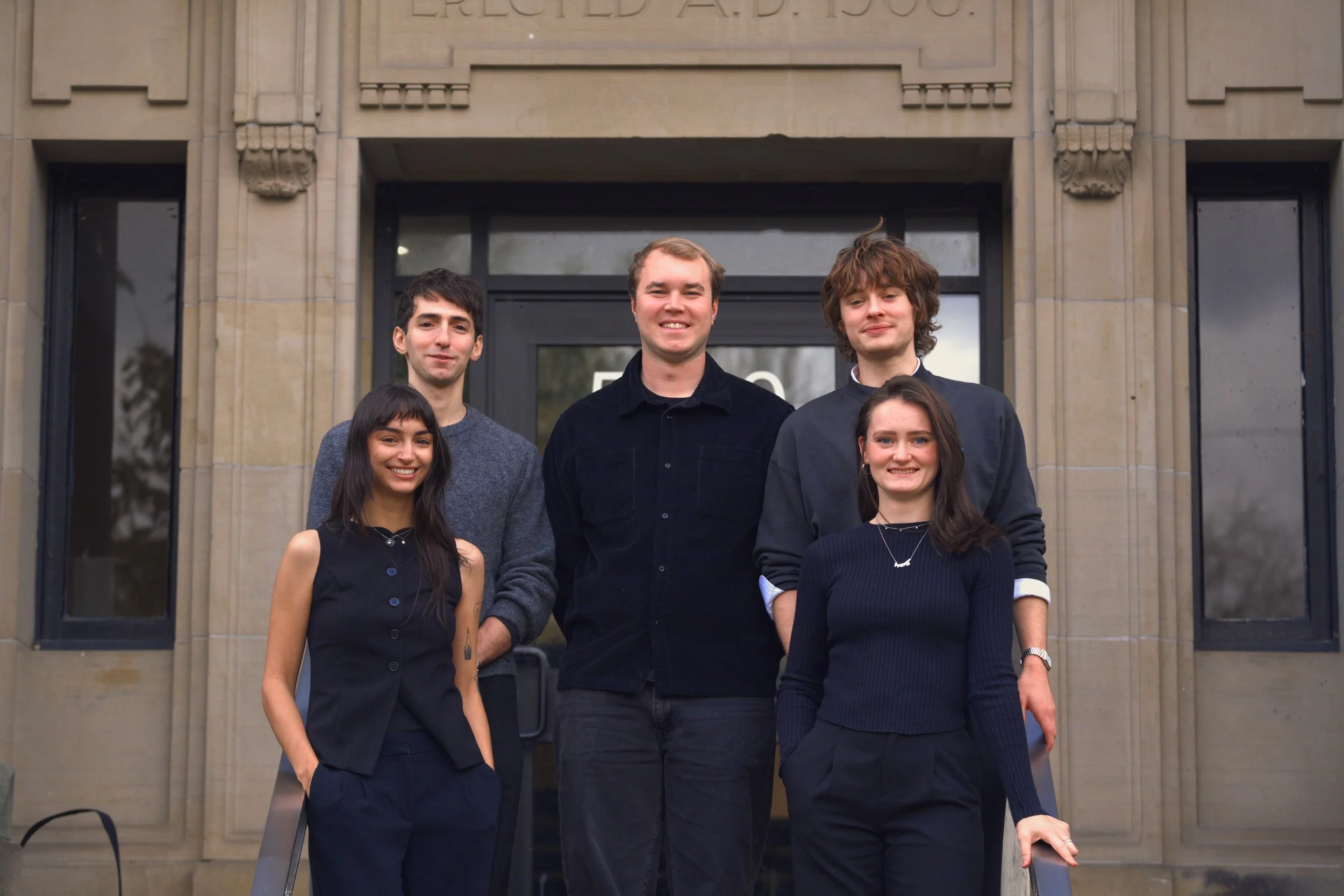
Pictured: Lauryn Marchand, Mahmoud Istanbouli, Thomas Emerson, Ryan Torosantucci, Cameron Tiffin
Buildings are designed to last, but the creative ideas behind their designs aren't always preserved. For 15 years, generations of Dalhousie architecture students have passed through the program without the visibility or documentation their work deserved. Now, nonother than the Studio East publishing society has changed that.
First established in 1995, Studio East showcased student projects for more than a decade before its final edition in 2011. The idea to revive it this year emerged last summer, when students involved with the architecture student association saw an opportunity to bring the publication back.
“We saw so much good work happening in the architecture school,” Cameron Tiffin explained. “It’s a really awesome way to highlight what students are doing.”
And so began the rebuilding of Studio East with a team of eight graduate students who had never collaborated on such a massive project together. Navigating a new environment was intimidating, but they remained driven by student enthusiasm; determined to bring the publication to life as a team.
Over the course of about eight months, the team managed everything from collecting submissions and editing layouts, to securing funding, coordinating printing, and planning distribution.
While faculty members and publishing contacts provided guidance, much of the process involved learning as they went, dividing their responsibilities between editorial and production work.
Without hesitation, architecture students flooded Studio East with their own submissions, contributing unique projects to the publication through their own writing and images. As these submissions arrived, the project grew beyond its original scope, consequently raising the printing costs and pushing the team to re-evaluate their plans in order to ensure the final product remained accessible, inclusive, and cohesive.
The editorial team ultimately organized student work according to academic progression, allowing readers to follow the development of design skills from early undergraduate exercises, to complex master's-level proposals.
Beyond showcasing current projects, the team wanted to reconnect with the journal's history while creating something future students could look back on. That vision inspired this year's theme: inheritance.
Exploring how knowledge, ideas, and traditions are passed between generations, the theme shaped both the publication's content and design. The team retained the Studio East name to honour its legacy while introducing the beginning of their new identity by including colour photography, moving beyond the predominantly black-and-white pages of earlier editions.
Local professors and practising architects also contributed reflections on inheritance, sharing perspectives on architectural education, personal experiences, and the profession.
Together, these contributions classify the publication somewhere in-between an architectural journal and a yearbook, capturing the projects, people, and experiences that define a moment in the school's history.
Following their revival success, Studio East has already begun preparing for its future with a brand-new committee to produce the next edition. Supported by documentation, resources, and lessons passed down by the outgoing team, this transition aims to establish Studio East as an annual tradition.
The handover also reflects the very theme that inspired the publication; just as architectural knowledge passes between generations of students, so does the responsibility of preserving their work.
Available at the Sexton Library alongside earlier editions, Studio East's latest publication offers a glimpse into how students learn to embrace the world around them. Whatever your field of study, in its pages you might find more similarities to your own journey than you'd expect!
Architecture shapes the spaces we share, and Studio East introduces the people who will shape them next.